AI Operating Model: The Org Design Nobody Redrew.
New tools, old machine.
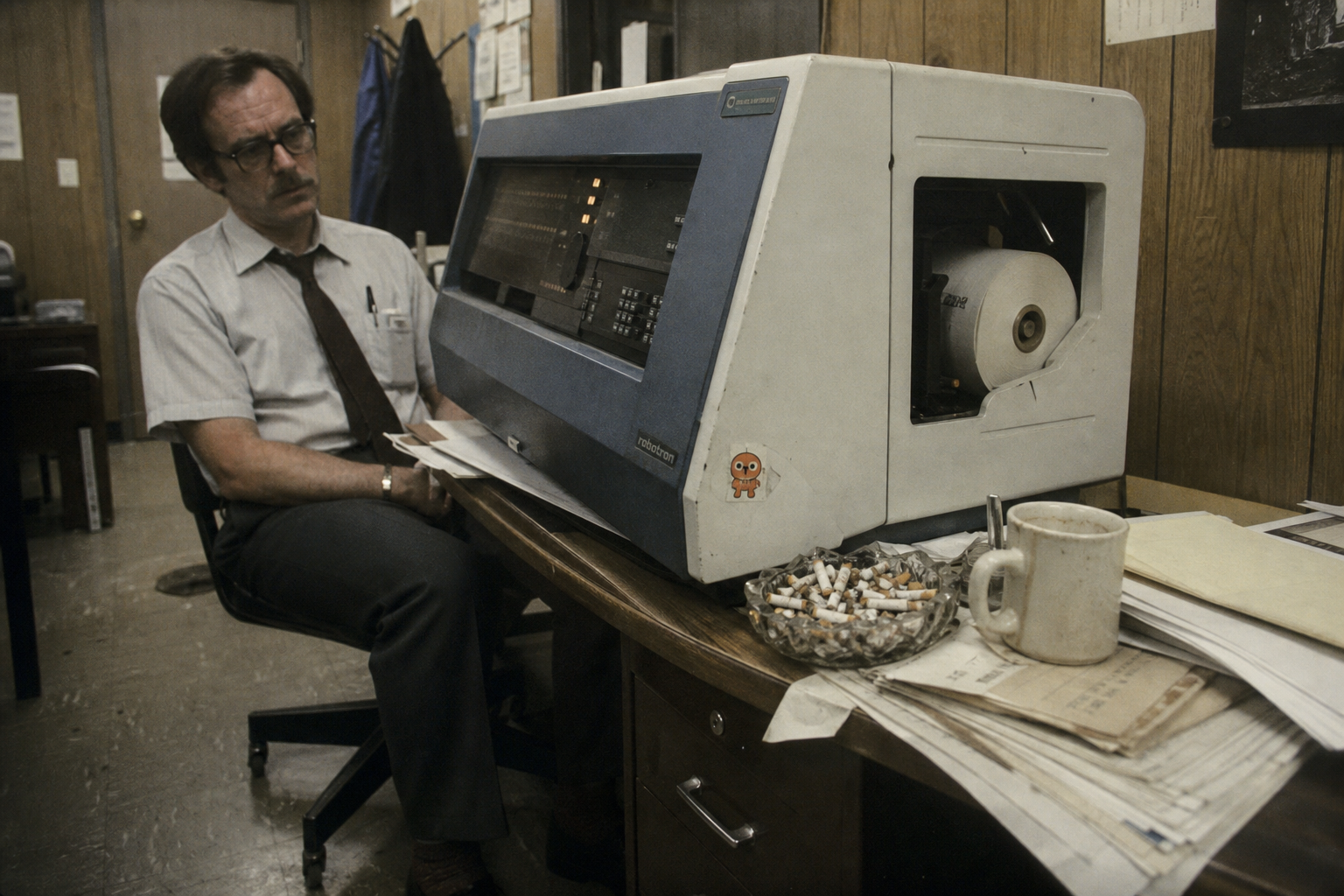
Walk through almost any organization a year into its AI investment and you will find the same quiet mismatch. The tools are new. Everything around them is not. The same people approve the same things in the same order. The same review layers check the work. The same roles have the same job descriptions, the same career ladders, the same measures. AI was added to the organization the way a new appliance is added to a kitchen: plugged in, without rewiring the house.
That is an operating model problem, and it is the reason so many AI programs produce activity without advantage. The work changed shape. The machine that organizes the work did not.
Leadership knows this, at least at the top. Mercer's Global Talent Trends 2026 found that 63% of the C-suite say redesigning work for AI is their top ROI priority, but only 46% of HR leaders agree. The intent to redesign exists. The shared plan for actually doing it, across the leaders who would have to carry it, does not.
The question underneath: what do humans own now?
Every operating model is an answer to one question: who does what, and who answers for it? AI does not remove the question. It sharpens it.
For every role the tools touch, your model needs a plain answer to what the human owns. Not a diplomatic answer, a real one. The judgment calls that cannot be delegated. The relationships that are the actual asset. The accountability for what goes out the door. When that ownership is explicit, AI reads as leverage: the machine drafts, the human decides. When it is ambiguous, AI reads as replacement in progress, and your people respond to that reading, not to your intentions.
Most of the resistance that gets blamed on culture is just this ambiguity, unaddressed. People are not afraid of tools. They are afraid of not knowing what their value is once the tool arrives. The operating model is where you answer them, structurally, in writing, role by role.
Review layers: built for human error, aimed at machine output.
Your quality system was designed around how humans fail: occasionally, unpredictably, in ways experience learns to catch. Machine output fails differently: fluently, confidently, at volume. Point the old review machinery at it and you get one of two failure modes.
Either the reviewers cannot keep up with the volume and start rubber-stamping, which means your quality bar quietly became the model's quality bar. Or every AI-touched piece of work goes through every legacy checkpoint, and the tool that was supposed to save time now feeds a longer queue. Teams notice when the official path is slower than just doing it themselves, and they respond the way people always respond to slow official paths: they route around them.
The fix is designing review for the new shape of the work: risk-tiered checking instead of uniform checking, human judgment concentrated where errors are expensive, and explicit ownership of the final call. That is operating model work. No vendor sells it.
The rung you are quietly removing.
Here is the part of the model with the longest fuse. The work AI absorbs first is very often the work junior people learned on. The first drafts, the research passes, the routine analyses: that was never just output. It was the apprenticeship your senior judgment came from.
Keep the old career ladder while removing its bottom rung and you will not feel it this year. You will feel it in a few years, as a missing generation: nobody ready to step up, because nobody got to do the work that builds the stepping. An AI operating model that ignores this is borrowing seniority from a future it is not funding. Entry roles need redesigning around what still teaches the craft, and apprenticeship has to become deliberate now that it is no longer a byproduct of the workflow.
Redesign follows use. Not the other way around.
The tempting move, especially with a consulting deck on the table, is to redraw the whole operating model first: new org chart, new roles, new RACI, then deploy into the new structure. Resist it. You would be designing around guesses, and the guesses are usually wrong in the places that matter.
The sequence that works runs the other way. Get the tools into real teams, deliberately chosen. Watch where the work actually moves: which tasks collapse, which judgment suddenly matters more, where the review queue forms, what the juniors stop learning. That ground truth, not the deck, tells you what the new model needs to be. Then redraw it, team by team, while the evidence is fresh.
Design follows use. Get the order right and the operating model ends up shaped like how your people actually work now. Get it backwards and you will be reorganizing again within the year.
Where does your model actually stand?
If your tools are live and the organization around them is unchanged, the distance between the two is where your return is leaking. The AI Alignment Snapshot gives you the ground-truth read in about eight minutes: where work has genuinely changed, where the old machine is fighting the new tools, and which team should anchor the redesign.
The AI Alignment Playbook is the method for the redesign itself: mapping what your people's resistance is telling you about the model, and rebuilding roles, review, and sequence around how the work actually happens now.
For the full journey with a partner in the room, the AI Alignment Partnership is the bespoke engagement.
Or start with a conversation. Book a discovery call here. We will ask what your people own now. It is a shorter conversation than you would expect, and a longer one than most organizations have had.
Take it with you
Download this as a PDF
A clean, branded version to read offline or share with your team.